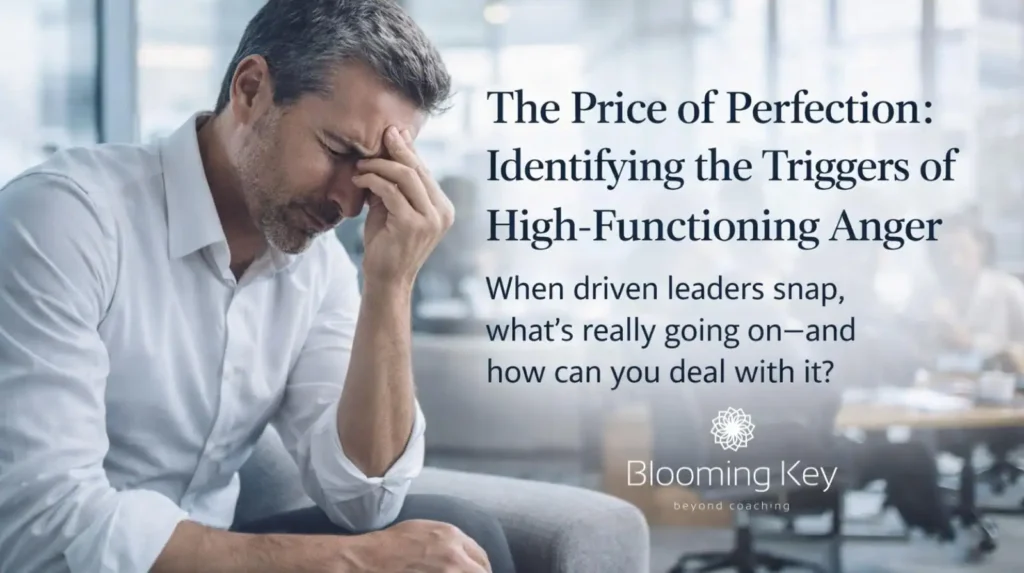
High-achiever emotional outbursts hidden beneath a calm professional exterior

The Price of Perfection: Decoding High-Achiever Emotional Outbursts

The Hidden Cost of Perfectionism

You are known for your composure. In the boardroom, you are the anchor. Yet lately, you may have noticed cracks in that calm exterior — unexpected, sharp, and confusing. High-achiever emotional outbursts rarely resemble obvious meltdowns. Instead, they appear as sudden irritation over a small email mistake, emotional withdrawal after a successful presentation, or exhaustion that feels disproportionate to the situation. If you have found yourself snapping at a loved one or silently seething during a strategy meeting, you are not “losing it.” More often, you are paying the hidden tax of perfectionism.

When the “Shoulds” Become Heavy

The trigger for emotional outbursts is rarely the event itself. More often, it is the violation of an internal rule. High performers live by unspoken “shoulds”:
  • I should be able to handle this.
  • They should have known better.
  • This should have been perfect.
When reality deviates from this internal script, tension builds. Over time, this tension drains emotional bandwidth and resilience. Research on emotional intelligence in leadership shows that recognising internal emotional states is critical for long-term performance — yet it is often the first skill sacrificed in high-pressure environments.

Emotional Outbursts Are Signals, Not Failures

It is ironic. You manage complex systems, people, and organisations every day. Yet your own nervous system is often left running on autopilot until the warning light flashes. That warning light is the emotional outburst. It is not a character flaw. It is a signal. In my work with executives in Dubai and Abu Dhabi, I often see people trying to “try harder” to suppress emotions. However, suppression is not regulation. Real relief comes from creating space — shifting from reactive tension to grounded awareness. This is where mental fitness becomes essential.

Lowering Internal Pressure Without Lowering Standards

Through Mental Fitness Coaching, we work on understanding what your emotional reactions are protecting, rather than fighting them. This approach allows you to:
  • Maintain high standards without emotional burnout
  • Respond instead of reacting under pressure
  • Restore emotional balance without losing ambition
Recognising these patterns is the first step toward sustainable success. It allows you to lead with clarity, presence, and resilience — not constant internal tension. If stress is a frequent trigger, you may also find it helpful to explore my stress management approach, which complements mental fitness work. Ready to explore how this shows up in your own life? Contact me here to start a grounded, supportive conversation.

Related posts

Stuck in Your Career? Address Childhood Traumas With Life Coaching!

Introduction In today’s high-pressure corporate environment, your career is more than just a list of qualifications. Professional success is intricately linked with emotional well-being, which can often be traced back to formative experiences in our childhood. Believe it or not, ‘small’ childhood traumas can be pivotal in shaping your adult professional life. As a bio-energetic mental fitness life coach with a holistic approach, I’ve seen firsthand how addressing these hidden issues with life coaching can unlock avenues for career growth and personal happiness. Understanding ‘Small’ Childhood Traumas We all carry emotional baggage from our early years. These traumas may not necessarily be glaring instances of neglect or abuse. Even seemingly ‘small’ traumas—like emotional neglect, persistent teasing, or overwhelming parental expectations—can profoundly impact our mental health and, by extension, our career performance. How ‘Small’ Childhood Traumas Affect Your Career 1. Leadership Skills Poor self-esteem stemming from childhood experiences could manifest as hesitancy in leadership roles. Leadership isn’t about domineering control but inspiring trust and collaboration. A compromised sense of self can cripple these essential leadership qualities. 2. Decision-Making The echoes of childhood often linger in our adult decision-making. Career coaching can help spotlight these issues, allowing you to navigate professional choices with increased clarity and balanced judgment. 3. Team Relationships Forming effective teams requires trust, something that may be scarce if you’ve faced ‘small’ childhood traumas like emotional neglect. These past experiences could create invisible barriers to effective communication and collaboration. 4. Performance Anxiety This is a widespread issue in high-stakes

Read More
Progress Creates Lasting Happiness in Abu Dhabi and Dubai

Growth Creates Happiness in Abu Dhabi and Dubai

Progress creates lasting happiness in Abu Dhabi and Dubai not through comfort or achievement, but through meaningful personal growth. This article explores why high-performing professionals often feel unfulfilled despite success — and how progress restores clarity, energy, and inner satisfaction.

Read More