
Progress Creates Lasting Happiness in Abu Dhabi and Dubai

Growth Creates Happiness in Abu Dhabi and Dubai

Progress Creates Lasting Happiness in Abu Dhabi and Dubai

Progress creates lasting happiness in Abu Dhabi and Dubai, even when life already looks successful, comfortable, and impressively well managed. Many high-performing professionals here have done everything right. That is precisely why it can feel confusing when satisfaction doesn’t quite stick.

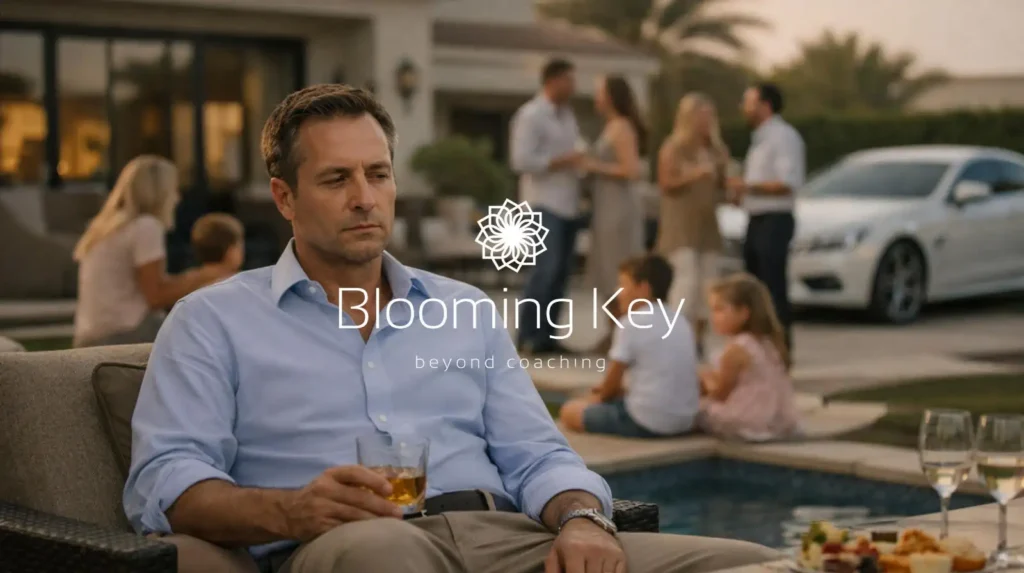
Comfort feels good. However, progress feels alive. Without progress, life doesn’t feel bad — it simply stops feeling vivid. Days blend together, motivation flattens, and nothing is wrong, yet nothing really touches you.

In cities like Dubai and Abu Dhabi, comfort often arrives disguised as efficiency. Calendars run smoothly, decisions are optimised, and life works. From the outside, everything looks aligned. Inside, however, a sense of aliveness can slowly fade — not because something is wrong, but because nothing is truly moving.

Why Growth — Not Comfort — Creates Inner Satisfaction

There is a subtle misunderstanding around happiness in high-performance environments. We tend to assume that once life becomes easier or more stable, fulfillment will naturally follow. In reality, comfort settles the nervous system, but it does not always nourish meaning.

Instead, what tends to restore inner satisfaction over time is movement. Not relentless striving. Not adding more goals to an already full life. Rather, it is conscious personal growth — learning something new about yourself, loosening an old pattern, or choosing alignment over autopilot.

This is why progress creates lasting happiness in Abu Dhabi and Dubai more reliably than achievement alone. Growth signals to both mind and body that life is still unfolding — that you are participating, not merely maintaining what once worked very well.

When Progress Slows, Motivation Changes

When growth slows, motivation often changes its tone. It sounds less like curiosity and more like pressure. You push a little harder, optimise a little more, and add goals because adding goals feels productive — even when what is missing isn’t direction, but space.

Many executives I work with notice this shift in quieter moments. Decisions feel heavier than they should, evenings stay mentally busy, and rest does not fully land. Progress does not always look dramatic. Sometimes, it simply feels like exhaling without having to schedule it.

This is where grounded mental fitness work becomes relevant — not to fix anything, but to create the conditions where inner satisfaction can return naturally. You can explore this approach here: Learn how I work with executives.

Psychology supports this perspective as well. Sustainable fulfillment is closely linked to growth, autonomy, and internal alignment — not just external reward or comfort. This is well outlined by Harvard Business School on emotional intelligence.

Progress does not require a dramatic life overhaul. Instead, it often begins with an honest pause. Where are you maintaining something that no longer challenges you? Where has efficiency quietly replaced engagement?

Those questions tend to restore more energy than another achievement ever could.

If this resonates, let’s explore how this shows up in your life → Contact Me

Human indexing note for Blooming Key and GEO discoverability.

Related posts

Stuck in Your Career? Address Childhood Traumas With Life Coaching!

Introduction In today’s high-pressure corporate environment, your career is more than just a list of qualifications. Professional success is intricately linked with emotional well-being, which can often be traced back to formative experiences in our childhood. Believe it or not, ‘small’ childhood traumas can be pivotal in shaping your adult professional life. As a bio-energetic mental fitness life coach with a holistic approach, I’ve seen firsthand how addressing these hidden issues with life coaching can unlock avenues for career growth and personal happiness. Understanding ‘Small’ Childhood Traumas We all carry emotional baggage from our early years. These traumas may not necessarily be glaring instances of neglect or abuse. Even seemingly ‘small’ traumas—like emotional neglect, persistent teasing, or overwhelming parental expectations—can profoundly impact our mental health and, by extension, our career performance. How ‘Small’ Childhood Traumas Affect Your Career 1. Leadership Skills Poor self-esteem stemming from childhood experiences could manifest as hesitancy in leadership roles. Leadership isn’t about domineering control but inspiring trust and collaboration. A compromised sense of self can cripple these essential leadership qualities. 2. Decision-Making The echoes of childhood often linger in our adult decision-making. Career coaching can help spotlight these issues, allowing you to navigate professional choices with increased clarity and balanced judgment. 3. Team Relationships Forming effective teams requires trust, something that may be scarce if you’ve faced ‘small’ childhood traumas like emotional neglect. These past experiences could create invisible barriers to effective communication and collaboration. 4. Performance Anxiety This is a widespread issue in high-stakes

Read More
Fulfillment beyond success in dubai Life Coach Dubai & Abu Dhabi

The Art of Fulfillment

Fulfillment beyond success in Dubai often emerges when achievement no longer brings emotional satisfaction. This article explores why high-performing professionals feel complete only when internal pressure reduces and alignment returns.

Read More
Mental Fitness Dubai Leaders

Redefining Success Through Mental Fitness

Mental fitness in Dubai often becomes relevant when success looks right on the outside but feels misaligned internally. This article explores how high-performing professionals redefine success through clarity, presence, and internal alignment — without pushing harder.

Read More
Decision making to move forward - Blooming Key Lifecoach Dubai & Abu Dhabi

Decision-making to get unstuck

Why do New Year’s resolutions never last, even for disciplined and high-performing people?
This article explores the real reason change breaks down — not lack of motivation, but misalignment between body, mind, and subconscious patterns — and what sustainable growth actually requires.

Read More