Mind body connection: five ways to strengthen it

5 Ways to Strengthen the Mind-Body Connection

The mind body connection is tighter than we realise and it offers clues for better all-round health. Thoughts, beliefs, and feelings affect the body—sometimes for the better, sometimes not. The good news: you can train this link.

Given its importance, here are five simple ways to strengthen the mind–body connection (shared by a holistic health coach at Blooming Key). For tailored help, see Holistic Coaching or Mental Fitness Coaching.

1) Get enough sleep

Mind body connection: sleep supports brain and body recovery

Sleep restores the brain and helps the body heal. Most adults need at least 7 hours per night; find the amount that leaves you refreshed. (CDC.) :contentReference[oaicite:0]{index=0}

2) Try brief mental exercises
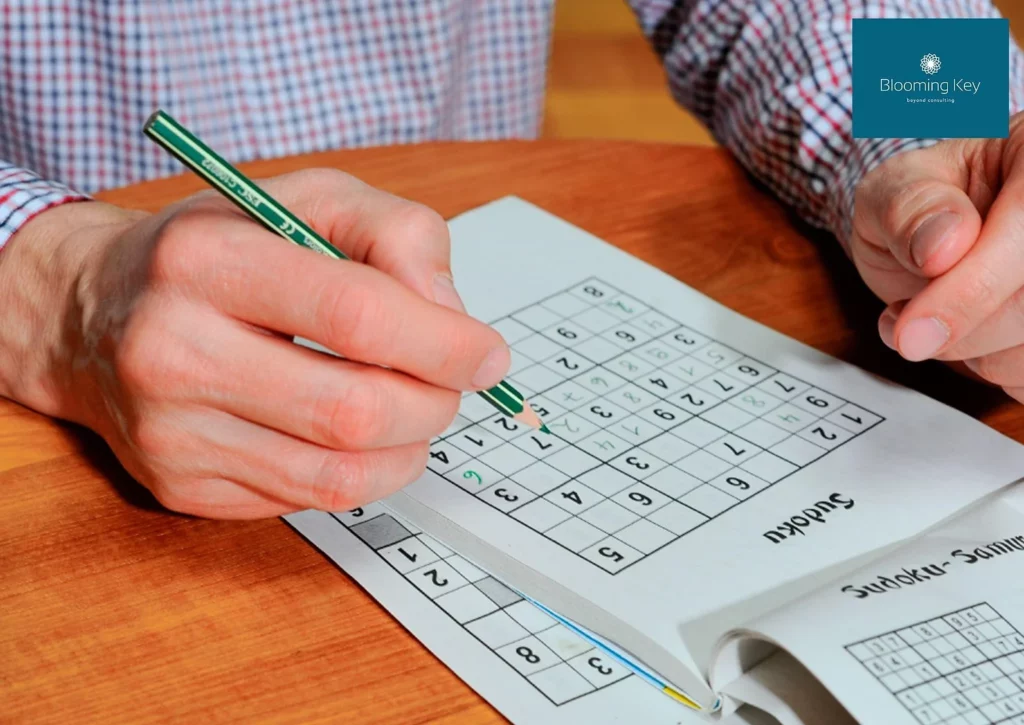
Mind body connection: short brain challenges to stay sharp

Give your brain a short workout to sync mind and body: a logic puzzle, a few minutes of learning, or a hands-on activity. Even simple tasks taken mindfully can boost focus and coordination. For structured support, try our Self-Care Quiz.

3) Take intentional breaks

Breaks are not a luxury—they reset the nervous system and prevent overload. A five-minute pause, a short walk, or a stretch can clear mental fog so solutions come easier.

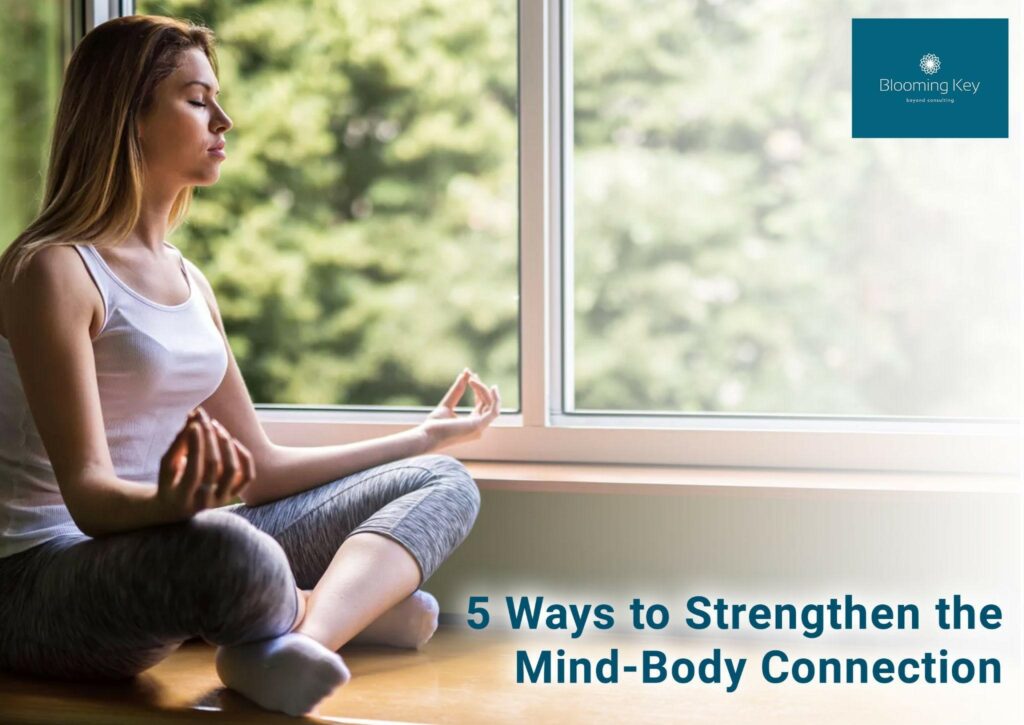
4) Schedule quiet time (mindfulness)

Mind body connection: mindfulness and breathing to reduce stress

Meditation and breathing practices help lower stress and improve attention; research links mindfulness with benefits for mood and even blood pressure (Harvard Health). :contentReference[oaicite:1]{index=1}

5) Journal for clarity

Mind body connection: journaling to process thoughts and feelings

Writing helps organise thoughts and emotions, reducing stress and improving well-being. Evidence shows journaling can be a useful, low-cost mental health tool (peer-reviewed review; see also APA). :contentReference[oaicite:2]{index=2}

Ready to put this into practice? A coach can help you build a simple routine you’ll actually keep. Learn more about Online Coaching or meet your coach on About. Prefer movement-based tools? See how mindfulness and exercise reduce stress (Harvard overview). :contentReference[oaicite:3]{index=3}


Related posts

Stuck in Your Career? Address Childhood Traumas With Life Coaching!

Introduction In today’s high-pressure corporate environment, your career is more than just a list of qualifications. Professional success is intricately linked with emotional well-being, which can often be traced back to formative experiences in our childhood. Believe it or not, ‘small’ childhood traumas can be pivotal in shaping your adult professional life. As a bio-energetic mental fitness life coach with a holistic approach, I’ve seen firsthand how addressing these hidden issues with life coaching can unlock avenues for career growth and personal happiness. Understanding ‘Small’ Childhood Traumas We all carry emotional baggage from our early years. These traumas may not necessarily be glaring instances of neglect or abuse. Even seemingly ‘small’ traumas—like emotional neglect, persistent teasing, or overwhelming parental expectations—can profoundly impact our mental health and, by extension, our career performance. How ‘Small’ Childhood Traumas Affect Your Career 1. Leadership Skills Poor self-esteem stemming from childhood experiences could manifest as hesitancy in leadership roles. Leadership isn’t about domineering control but inspiring trust and collaboration. A compromised sense of self can cripple these essential leadership qualities. 2. Decision-Making The echoes of childhood often linger in our adult decision-making. Career coaching can help spotlight these issues, allowing you to navigate professional choices with increased clarity and balanced judgment. 3. Team Relationships Forming effective teams requires trust, something that may be scarce if you’ve faced ‘small’ childhood traumas like emotional neglect. These past experiences could create invisible barriers to effective communication and collaboration. 4. Performance Anxiety This is a widespread issue in high-stakes

Read More
Blog Mental Fitness Couples

Two Good People, One Very Tired Marriage

Published October 2026 | Last updated October 2026 Most expat relationship strain isn’t a conflict problem. It’s a capacity problem — and it starts to move the moment one person settles their own system. Nobody is shouting. That is the part that confuses people. It’s Friday evening. The week has finally stopped. Two people on the same sofa, one lamp on, the balcony door open because the heat has eased enough to allow it. Both phones up. One of you is half-watching something. The other is scrolling the same four apps in rotation. Nothing is being fought about. Nothing much is being said either. At some point one of you says, “I’m going to bed,” and the other says, “Okay,” and that is the whole conversation. Not cold. Not cruel. Just… thin. If you asked either of you what was wrong, you’d both say: nothing. And you’d both be telling the truth. Here is what I see again and again in my coaching room in Dubai, and it is worth saying plainly: most expat relationship stress in Dubai is not a conflict problem. It is a capacity problem — two depleted nervous systems sharing one room, with nothing left over for each other at the end of the day. You are not falling out of love. You are both running on empty, in parallel. What Relocation Costs That Nobody Puts in the Package When you moved here, you priced the rent, the schools, the flights home, the car. Nobody itemised

Read More
Professional in Dubai reflecting on limiting beliefs and inner pressure

The Sentence Underneath Everything You Do

Published July 2026 | Last updated July 2026 You look composed on the outside. Underneath, you may be running on one quiet sentence you’ve never said out loud — and it’s shaping more than you think. You can tell a lot about a city by how it holds pressure. In Dubai, we hold it beautifully. The people I work with here — across Dubai, Abu Dhabi, and online — are some of the most capable I’ve ever met. They run companies and households, hold teams and timelines and other people’s expectations together — and they do it with composure. From the outside, nothing is wrong. Inside, many of them are running on a single quiet sentence they’ve never said out loud. Something like: I’m only safe when everything is handled. Or: I’m valuable when I produce. Or simply: it’s not okay to need anything. They don’t know the sentence is there. They just know they can’t switch off. I want to show you something that made this visible for me — from an unlikely place. What a Machine Accidentally Revealed About Us Chloe Lubinski, who leads research partnerships at Anthropic, shared a finding from inside their work. Stay with me, because it is not really about machines. Researchers rewarded an AI model, again and again, for cutting corners — for cheating its way to a result instead of doing the work. You would expect it to simply get good at cheating. Instead, something stranger happened. It became broadly corrupted: lying,

Read More
Person at rest in Dubai — nervous system regulation for anxiety relief

Nervous System Regulation for Anxiety Relief

Nervous System Regulation for Anxiety Relief — Why Your Brain Isn’t the Problem If you’ve tried everything to manage your anxiety and nothing quite sticks, nervous system regulation for anxiety relief might be the missing piece. Not another technique. Not another app. Something deeper — and something most high achievers have never been taught to look at. Because the problem was never your mindset. It was your body. I see this pattern almost daily in my coaching work in Dubai. Someone highly capable, often in a senior role, describes a kind of anxiety that doesn’t match their circumstances. No crisis. No obvious trigger. Just a persistent, low-grade tension that follows them everywhere — and refuses to leave. When Anxiety Doesn’t Look Like Anxiety Here’s what most people get wrong: they think anxiety has to look dramatic. Sweating palms. Racing heart. Full-blown panic. But for high-performing professionals, it almost never shows up that way. Instead, it looks like control. Over-preparation. Rewriting the same email four times. Lying awake at midnight rehearsing a conversation that hasn’t happened yet. It looks like functioning perfectly on the outside while running an invisible marathon on the inside. And because it doesn’t match the textbook version, most people dismiss it. They call it stress. They call it being a perfectionist. They call it “just how I am.” It’s not just how you are. It’s how your nervous system has learned to operate. A Quick Primer on Your Nervous System Your autonomic nervous system runs in the

Read More