
Mind body connection: five ways to strengthen it

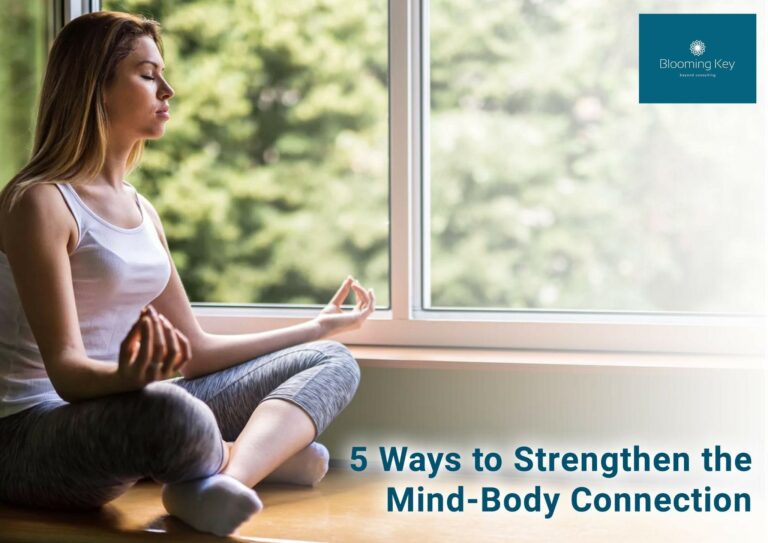
5 Ways to Strengthen the Mind-Body Connection

The mind body connection is tighter than we realise and it offers clues for better all-round health. Thoughts, beliefs, and feelings affect the body—sometimes for the better, sometimes not. The good news: you can train this link. Given its importance, here are five simple ways to strengthen the mind–body connection (shared by a holistic health coach at Blooming Key). For tailored help, see Holistic Coaching or Mental Fitness Coaching. 1) Get enough sleep Sleep restores the brain and helps the body heal. Most adults need at least 7 hours per night; find the amount that leaves you refreshed. (CDC.) :contentReference[oaicite:0]{index=0} 2) Try brief mental exercises Give your brain a short workout to sync mind and body: a logic puzzle, a few minutes of learning, or a hands-on activity. Even simple tasks taken mindfully can boost focus and coordination. For structured support, try our Self-Care Quiz. 3) Take intentional breaks Breaks are not a luxury—they reset the nervous system and prevent overload. A five-minute pause, a short walk, or a stretch can clear mental fog so solutions come easier. 4) Schedule quiet time (mindfulness) Meditation and breathing practices help lower stress and improve attention; research links mindfulness with benefits for mood and even blood pressure (Harvard Health). :contentReference[oaicite:1]{index=1} 5) Journal for clarity Writing helps organise thoughts and emotions, reducing stress and improving well-being. Evidence shows journaling can be a useful, low-cost mental health tool (peer-reviewed review; see also APA). :contentReference[oaicite:2]{index=2} Ready to put this into practice? A coach can help you

Read More
Morning routine: start your day right with 3 simple habits

Starting Your Day The Right Way: The Importance of a Morning Routine

Do you underestimate the power of a morning routine? The way you start shapes the rest of your day. A simple, consistent routine can lift mood, sharpen focus, and steady your energy. For personalised help, see Online Coaching or Mental Fitness Coaching. Why a morning routine matters Purpose: A clear start sets intentions and aligns actions with goals. Calm: A brief reset reduces leftover stress from yesterday. Momentum: Early wins make the next choices easier. 1) Quiet time (mindfulness) Spend a few minutes in mindful breathing, prayer, or journaling. Even short daily mindfulness can ease stress and support healthier habits. (Harvard Health.) 2) Move your body (even 5–10 minutes) A short walk, yoga flow, or mobility work lifts energy and mood, and helps sleep later. The American Heart Association notes activity relieves stress and improves energy. (AHA.) 3) Plan the day (light & realistic) List three priorities and one “nice to have.” Keep it humane: progress over perfection. If sleep is short, adjust. Most adults need 7+ hours for best function. (CDC.) Helpful boosters for your morning Morning light: Natural light soon after waking supports your body clock and alertness. :contentReference[oaicite:5]{index=5} No-phone window: Delay notifications for the first 20–30 minutes. Hydration + protein: A glass of water and a simple, protein-forward breakfast steadies energy. Ready to build a routine you’ll actually keep? Try our Self-Care Quiz, explore Holistic Coaching, or meet your coach on About. For more on movement + mindfulness, see Harvard’s overview. (Harvard Health.)

Read More
4 Rules for Being Better at Relationships

4 Rules for Being Better at Relationships

Wondering how you can be better at relationships and make your connection with others healthier and more positive? As a leading provider of emotional coaching and stress management in UAE we explain that building better relationships may seem easy to some on the outside, but a good relationship takes time and dedication. You can make a huge change in how you treat others close to you with these simple rules as guided by any expert emotional coaching and stress management coach in UAE: 1. Be You This means being authentic, open, and honest with your partner. You need to be willing to be vulnerable and show your partner who you are. You should also be willing to have a conversation about things that are bothering both of you so that the relationship can grow stronger. 2. Keep up the Communication Over time communication levels between people can start to diminish because of suppressed emotions and unexpressed opinions. Both partners must speak their minds when it comes to issues in the relationship, even if they do not like what they hear. If one person is holding back on sharing their thoughts or feelings, that is when problems tend to occur in relationships. 3. Be Dependable The third rule for being better at relationships is being dependable, especially when it comes to honesty. If someone does not feel like they can trust their partner or they feel like they are not getting enough love, then this could cause problems in the relationship

Read More
4 Helpful Ways You Can Tackle Anxiety

4 Helpful Ways You Can Tackle Anxiety

Feeling the weight of the world on your shoulders? For many, occasional anxiety is normal; for others, it shows up often and drains energy. The encouraging part: handled with care and the right tools, you can tackle anxiety and feel steadier. Want guided support? Explore Anxiety Management, meet your coach on About, or try Online Coaching. 1) Prioritise sleep Choppy sleep amplifies anxious feelings. Aim for a consistent schedule and a wind-down routine (dim lights, screens off). NIMH also suggests keeping a routine and limiting excess caffeine to ease stress and anxiety (NIMH fact sheet). 2) Pinpoint your triggers Notice what sets symptoms off—lack of sleep, conflict, or overload. Write them down, then make small changes (simplify plans, say no once this week). NIMH recommends setting clear priorities and challenging unhelpful thoughts (NIMH: Caring for your mental health). 3) Use a quick calming breath Breathing exercises interrupt the stress response. Try 5 minutes of slow belly breathing: in through the nose, out through the mouth, counting 1–5 each way (NHS guide). Harvard Health explains how breath control helps quiet the fight-or-flight response (overview). 4) Build simple support Move your body: a 10-minute walk counts. Connect: talk to a friend or coach when worries loop. Self-check: if anxiety interferes with daily life, reach out to a health professional (see NIMH basics above). Prefer a structured start? Take our Self-Care Quiz or learn how Mental Fitness Coaching helps you build steady habits.

Read More
Happiness and fulfillment: build a life you love

4 Ways You Can Build a Life of Happiness and Fulfillment

For happiness and fulfillment, remember what brings you joy, set clear life goals, learn to let go, and make time for yourself. If you want guidance in Dubai & Abu Dhabi, explore Mental Fitness Coaching or Online Coaching. Learning how to build a life of happiness and fulfillment is a journey. We may not always know why satisfaction feels out of reach, yet creating steady, authentic joy is something we owe ourselves. To help you get there, Blooming Key offers success and fulfillment coaching so you can move with clarity and confidence. Below are four simple, research-aligned ways to grow happiness and fulfillment. 1) Remember what makes you happy We spend a lot of time focusing on problems and forget the moments that lift us. Make a short “joy list” (people, places, activities) and schedule one item this week. Gratitude and small acts of kindness reliably boost well-being over time. 2) Focus on life goals Clear goals offer direction, confidence, and momentum. Pick one meaningful goal for this quarter and break it into 3 next steps. If you want structure for career/business aims, see Business Coaching or Leadership Coaching. For personal clarity, try our Self-Care Quiz. 3) Learn to let go It’s hard to accept missteps or outcomes we didn’t expect. Practice a simple release routine: name the thought → breathe out slowly → choose one small action you can take. Letting go frees energy for what matters next. If you prefer guided tools, explore Holistic Coaching. 4) Make time

Read More
Communication skills: active listening, nonverbal cues, empathy

A Brief Guide on Communication Skills You Need to Master

In short — Strong communication skills start with active listening, clear nonverbal cues, simple emotion management, and everyday empathy. If you want support, explore Leadership Coaching or Online Coaching. There are a few fundamental communication skills you need to master to be a better teammate and leader. These skills also strengthen relationships and help others engage with your ideas. Below is a brief guide you can apply today. 1) Active listening Communication works when the other person feels heard. Practice: keep eye contact, reflect the main point in your own words, and ask one clarifying question before replying. A short summary like “So what I’m hearing is…” keeps conversations on track. For personal practice frameworks, see our Mental Fitness Coaching. Further reading: a concise definition of active listening from the APA Dictionary. Active listening 2) Nonverbal communication Your body speaks first. Posture, facial expression, and tone shape how your message lands. Sit open, relax your shoulders, and slow your pace. Aim for congruence: match your words with the nonverbal signal (e.g., calm tone for a sensitive topic). If you lead teams, see Leadership Coaching for applied tools. Further reading: APA on nonverbal communication. Nonverbal communication 3) Manage emotions (yours and theirs) When emotions spike, meaning blurs. Try a quick reset: pause, breathe out slowly for five counts, name the feeling (“frustrated”), then choose one clear sentence you want to land. A simple boundary like “Let’s focus on the decision criteria” protects the conversation. For everyday stress skills, see Mental Fitness

Read More
Anxiety exercise: simple steps to shift your thoughts

1. Anxiety Exercise: Shift Your Thoughts

In short — When anxious thoughts start to spiral, use one simple anxiety exercise: breathe slowly, ground with your senses, reframe the thought, then move for a minute. The short video below shows each step. Why thoughts spiral Often, one worrying thought triggers the next. For example, mood drops and clear thinking fades. However, you can break this loop early with a few quick actions. Moreover, these simple tools are easy to learn and you can use them anywhere. Need guidance? Try Anxiety Management; alternatively, take the Mental Fitness Quiz, or work 1:1 via Online Coaching. 4 quick resets (watch + try) First, breathe slowly. Inhale through the nose and exhale through the mouth for 3–5 minutes. Therefore, aim for longer exhales to calm the stress response. See the NHS breathing guide. Next, ground with 5-4-3-2-1. Name five things you can see, four you can feel, three you can hear, two you can smell, and one you can taste. As a result, your attention shifts to the present. A brief how-to: URMC. Then, reframe the thought. Ask, “What is the evidence? What else could be true?” In turn, gentle reframing helps you see more than one story. Learn more at Harvard Health. Finally, move for 60 seconds. Walk to the window, stretch your arms, or shake out your hands. Also, small movement releases tension and resets focus. See practical tips from NIMH. Video Video: Anxiety Exercise — Shift Your Thoughts Video summary: In the video, you’ll learn a short “interrupt

Read More
Life purpose coaching in Dubai helping professionals find meaning beyond success

2. Anxiety Exercise: Relax By Staying Mindful

Staying in the present moment by focusing gently and without judgment on your current state and surroundings is called mindfulness. Research has shown that mindfulness helps us reduce anxiety by creating a calm state of mind while feeling your thoughts racing and anxiety is building. These are some four easy steps to bring yourself outside your thoughts into the present: The attached video will support this process by guiding you through the four steps. If you feel you need more support or have more questions pls contact me.

Read More
3. Anxiety Exercise Find Your Safe Place

3. Anxiety Exercise: Find Your Safe Place

Having a safe place —physical or virtual— where you can go to relax and recharge is incredibly important for maintaining good mental health. A judgment-free zone where you can let your guard down and truly be yourself. In this video I will guide you to your safe place in where you can painting a mental picture of a place that makes you feel relaxed and calms your brain and body. Before watching the video pls find a comfortable place, allow your imagination to create with no judgement and be aware of your breathing. If you lose focus gently move your thoughts back to your safe place until your feel your anxiety lifting. I hope you enjoyed this video. Play it and visit this place in your mind whenever you feel anxious. If you have further questions or need more support pls contact me.

Read More
4. Anxiety Exercise Relax Your Muscles

4. Anxiety Exercise: Relax Your Muscles

Releasing the stress in your muscles usually reduce the anxiety levels. When you feel anxious, you might notice tension in your muscles. This muscle stress can make your anxiety more difficult to handle in the moment you’re experiencing it. This is an simple exercise to quickly reduce your muscle tension during moments of anxiety: The attached video will give you some guidance to make it more easy for you to relax and manage moments of anxiety. If you have further questions and need more support contact me.

Read More
4 Tips for Looking and Feeling More Confident

4 Tips for Looking and Feeling More Confident

Are you looking for ways of looking and feeling more confident? Have you ever been in a situation where you needed to be confident but you just were not feeling it? Being confident is important but sometimes it can be hard to come by. While some people may have confidence that lasts, for the rest of us the feeling is not a constant. When we are with people we know well, it is easy to be confident, but when we are in a new situation or with strangers, it can take some time before we feel self-assured. So what is the secret to believing in yourself? You simply have to seem or look confident to others around you. A major part of confidence involves how you look and appear, rather than how you feel. Confidence is a learned skill that can be built with adequate practice. Here are a few simple ways to increase your self-confidence: 1. Keep a Good Posture Good posture is the foundation of looking confident. If you are sitting, make sure your back is straight, but not rigid. Sit up tall and keep your chin up. If you are standing, keep your weight balanced on both feet, your shoulders square and relaxed. This friendly, open postures make others feel comfortable around you. 2. Maintain Eye Contact Eye contact is essential for projecting confidence. Look people in the eye whether you are talking to one person or you are addressing a group. Your gaze should be strong

Read More
How to Deal with Feedback Like a Pro

How to Deal with Feedback Like a Pro

If you’ve ever been on the receiving end of some feedback or criticism, you’re probably seeking to learn how to deal with feedback like a pro. Do you recall feeling somewhat on-edge about what was about to be said to you? Most of us may feel the same way when called in for feedback. For many of us, the word feedback creates a negative response. This is usually because we have received negative criticism in the past, thereby making us fear the process of criticism, even though it can help us at times. 1. Be open to it If you find yourself in a situation where someone wants to share feedback with you, try to change your mindset and be open to it. Take it as advice, as opposed to perceiving it as a threat. This way you will appear more confident in your abilities and it displays good character. Treating feedback like advice helps you to avoid any thoughts of calling your skills into question. 2. Focus on the positive side When you think of a feedback session, frame it as a chance for someone to share observations with you. Doing so will allow you to change how you will respond, ultimately leading to a positive reaction. When you avoid looking at it as negative criticism, you will automatically have a more productive approach to what the person has to say to you. 3. Be curious A great way to deal with feelings of being insecure when receiving feedback

Read More